AI IN EDUCATION
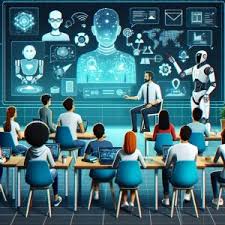
Is there cause for worry or concern about AI’s role in education? Some would argue that there is no cause for concern whatsoever. However, others differ. You know what they say about a hammer, right? You can use it to harm someone or you can use it for its purpose of hitting a nail into a piece of wood. And when AI first reared its head, the latter is exactly what we thought it would be used for. But now….we’re not so sure. Like most other industries, AI has posed a threat and some thousands of workers have already been laid off worldwide to make way for the new kid on the block. But how will this monster impact education?
1. The Erosion of Critical Thinking
If you’re a teacher reading this, you’ll probably agree that some students just couldn’t naturally be bothered to think critically about anything, due to pure laziness. But from what we can see, AI is just going to increase the erosion much faster. The most immediate threat is the potential for cognitive atrophy. When students use generative AI to summarize complex texts or solve intricate equations, they bypass the “productive struggle” necessary for deep learning. Education is not merely the acquisition of facts, but the development of the “mental musculature” required to analyze and synthesize information. If students outsource their thinking to algorithms, they risk becoming passive consumers of information rather than active, critical thinkers.
2. The Crisis of Academic Integrity
AI has fundamentally disrupted traditional assessment models. Standard essays and take-home assignments are now easily bypassable via AI tools like ChatGpt, among others, leading to a widespread integrity crisis. This doesn’t just make grading difficult for teachers; it devalues the assignment and/or diploma itself. When the “output” (the finished paper) is prioritized over the “process” (the research and writing), the intrinsic value of an education—showing that one has mastered a subject—is severely undermined.
3. Data Privacy and the Digital Divide
AI systems thrive on data. In educational settings, this involves collecting sensitive information about a student’s learning habits, performance, and even behavioral patterns. The threat of data breaches or the unauthorized use of student data to train commercial models is a significant ethical concern. Furthermore, an “AI Divide” is emerging: students in well-funded districts may access premium, safe AI tutors, while those in underserved communities are left with outdated tools or no access at all, further widening the global achievement gap.
AI is not a sentient monster, but it is a mirror of the data it consumes—often reflecting biases and inaccuracies. If left unregulated, it could transform education into a “solution engine” rather than a journey of discovery. To mitigate these threats, the focus must shift from using AI as a shortcut to using it as a “Socratic partner” that challenges, rather than replaces, the human mind.
